Riab, an example of heritage preservation, sustainable tourism and community participation
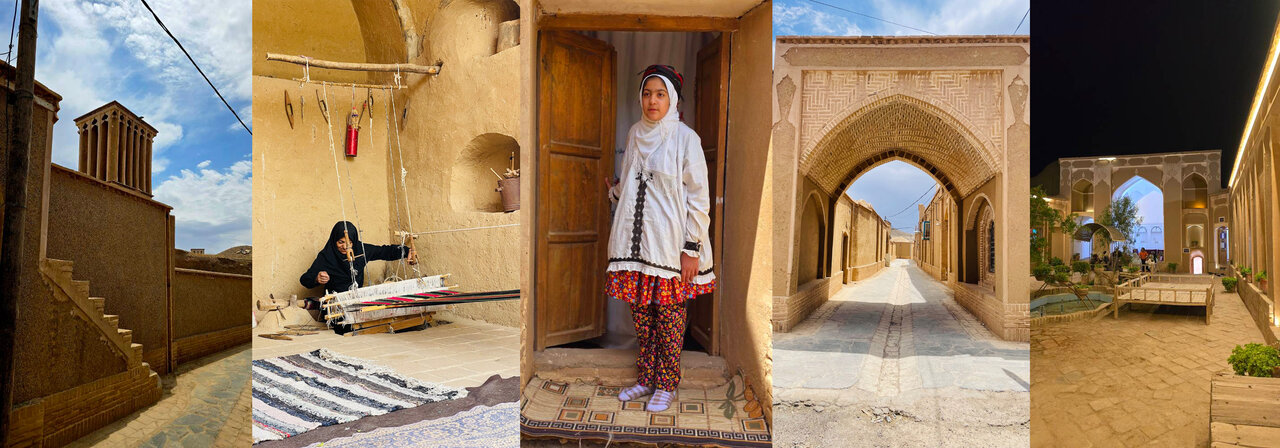
TEHRAN – The historical village of Riab in eastern Iran is emerging as a leading example of heritage preservation, sustainable tourism and community participation as it seeks international recognition through the United Nations Tourism (UN Tourism) Best Tourism Villages initiative.
Situated in Gonabad county of Khorasan Razavi province, Riab is known for its remarkably preserved earthen architecture, ancient qanat water system, and enduring cultural traditions. Officials and heritage experts say international recognition could strengthen efforts to protect the village’s historical identity while promoting sustainable economic development.
Nestled in a desert landscape, the village presents a rare example of a living desert community where traditional architecture, water management systems and local customs remain deeply interconnected.
Visitors entering Riab encounter a cohesive urban landscape built almost entirely from mudbrick and clay. Its skyline is defined by traditional windcatchers, while narrow alleys, covered passageways known as Sabats and densely arranged buildings reflect centuries of adaptation to an arid environment.
According to heritage specialists, the village represents a sophisticated form of climate-responsive architecture developed long before the advent of modern sustainability concepts. The compact layout, however, helps minimize exposure to intense sunlight, while shaded passageways provide protection from heat, strong winds and other environmental challenges.
“The village is one of the most complete and well-preserved examples of desert architecture in eastern Iran,” said Hamidreza Mahmoudi, head of the Cultural Heritage, Tourism and Handicrafts Department of Gonabad county.
He said local builders used indigenous materials and traditional knowledge to create structures capable of withstanding the region’s harsh climatic conditions.
“The spatial organization of the village was designed to reduce direct exposure to the sun, while the Sabats provide both shade and structural resilience against earthquakes and seasonal winds,” Mahmoudi said.
The architectural identity of Riab is inseparable from its relationship with water. The village developed around an ancient qanat system, now a UNESCO site, that channels groundwater through underground tunnels to support agriculture and daily life.
Heritage officials say the historical fabric of the settlement follows the natural slope of the land and the route of water flowing from the qanats. Traditional homes incorporated water chambers, underground access points and courtyard pools, integrating water directly into residential architecture.
This relationship between settlement planning and water management has made Riab one of the most valuable examples of sustainable desert living in Iran.
Among the village’s most notable features is its connection to the UNESCO-listed Qasabeh Qanat, part of a broader water-management tradition that has sustained communities in the region for centuries. Local residents have also participated in restoration efforts involving a 19-kilometer underground water channel regarded as one of the longest qanat systems in Iran.
Officials say the community’s involvement in preserving water infrastructure demonstrates the collective spirit that has characterized the village throughout its history.
Hadi Mohammadpour, a member of Iran’s parliament representing Gonabad and Bajestan, described Riab as one of the most important tourism and heritage assets in the province.
“Razavi Khorasan, particularly its desert cities such as Gonabad and Bajestan, possesses valuable historical sites, qanats, caravanserais and historic villages that reflect the culture and civilization of earlier generations,” he said.
According to Mohammadpour, Riab’s ancient qanats and traditional urban fabric make it one of the most prominent tourist attractions in southern Razavi Khorasan.
He noted that the village was among the first locations in the province to establish traditional eco-lodges and cultural tourism centers in 2017 and 2018. The village has already received national heritage recognition and has attracted increasing attention from cultural authorities in recent years.
One of Riab’s defining characteristics is the active role played by local residents in tourism development.
Villagers have established specialized working groups responsible for tourism policy planning, cultural content production, festivals and events, accommodation services and hospitality management. The model assigns clear responsibilities to residents and encourages participation at every stage of tourism planning and implementation.
Officials say this grassroots approach has helped ensure that tourism growth remains aligned with local values and community priorities.
“Riab is one of the few villages where a significant number of residents have shown strong interest in creating eco-lodges and recreational facilities,” Mohammadpour said. “This level of participation is highly important for sustainable tourism development.”
Heritage authorities regard community engagement as one of the strongest aspects of the village’s candidacy for international recognition.
Mahmoudi said Riab meets key criteria associated with the UN Tourism Best Tourism Villages program, including protection of cultural resources, economic sustainability, environmental stewardship and community participation.
He described the village as a “living tourism destination” rather than a preserved monument, emphasizing that traditions, customs and local knowledge remain part of everyday life.
The village is also known for its intangible cultural heritage. Religious ceremonies, seasonal celebrations, local crafts and traditional forms of hospitality continue to be practiced by residents.
Among the customs that have survived are religious mourning rituals such as Nakhl Gardani, as well as seasonal traditions including winter celebrations and pre-dawn community gatherings during the religious month of Ramadan.
Local handicrafts have also experienced a revival in recent years. Traditional textile production and kilim weaving have provided employment opportunities for younger residents while helping preserve cultural knowledge.
According to Mahmoudi, the village has become a successful example of bottom-up development, demonstrating how heritage preservation can generate economic opportunities for local communities.
The official also highlighted Riab’s linguistic heritage, describing the local dialect as a repository of ancient Persian vocabulary. Specialized terminology related to irrigation systems and qanat management has survived in everyday speech, offering valuable insights into the region’s historical relationship with water and agriculture.
Several historic landmarks contribute to Riab’s cultural significance. These include its traditional water reservoir, congregational mosque, central fortress and eco-lodges.

Beyond architecture, heritage experts point to Riab’s innovative environmental solutions as evidence of longstanding sustainable practices. Traditional cooling systems based on windcatchers, underground construction techniques and strategic tree planting along watercourses enabled residents to cope with extreme temperatures without relying on modern energy-intensive technologies.
Officials say these solutions are increasingly relevant as communities around the world seek environmentally sustainable approaches to development.
Despite its achievements, Riab faces a number of challenges. Climate change and prolonged drought represent the most serious threats to the village’s future, according to heritage authorities. Reduced water availability could undermine the qanat system that has sustained the settlement for generations.
“Riab remains alive today, but its survival depends on the continuous flow of water and the protection of its water infrastructure against drought and climate change,” Mahmoudi said.
He warned that damage to the village’s qanat system could jeopardize both livelihoods and long-term habitation.
Officials have also expressed concern about incompatible modernization. New construction that does not respect traditional architectural forms could disrupt the village’s visual harmony and alter its historic skyline.
Another challenge is maintaining cultural authenticity as tourism expands. Heritage experts caution that local traditions should remain genuine social practices rather than becoming performances designed solely for visitors.
To address these concerns, authorities have called for responsible tourism policies, educational initiatives and long-term planning aimed at balancing economic growth with cultural preservation.
Supporters of Riab’s international nomination believe global recognition would provide an important framework for addressing these challenges while strengthening conservation efforts.
For a number of local residents and heritage advocates, who talked to the Tehran Times, the village represents more than a historical settlement. It is a living example of how traditional knowledge, community cooperation and sustainable resource management can contribute to contemporary development.
AM
Leave a Comment